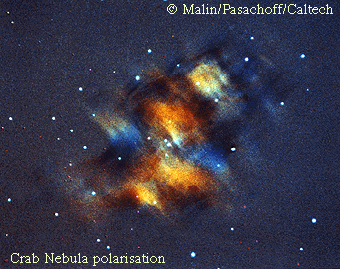
M1: Polarization of the Crab
The Crab Nebula resulted from a star that exploded - a supernova. Although the stellar explosion that caused the Crab Nebula was seen over 900 years ago, the nebula itself still expands and shines. Much of the emitted light has been found to be polarized. Light waves with the same polarization vibrate in the same plane. Light waves can be polarized by reflection from a surface, an effect familiar to sunglass wearing fishermen and skiers. Polarized light can also be emitted by regions that contain strong magnetic fields. Areas of different polarization above are highlighted by different colors. Mapping the polarization helps astronomers decipher which physical processes create the observed light.