Afterglow
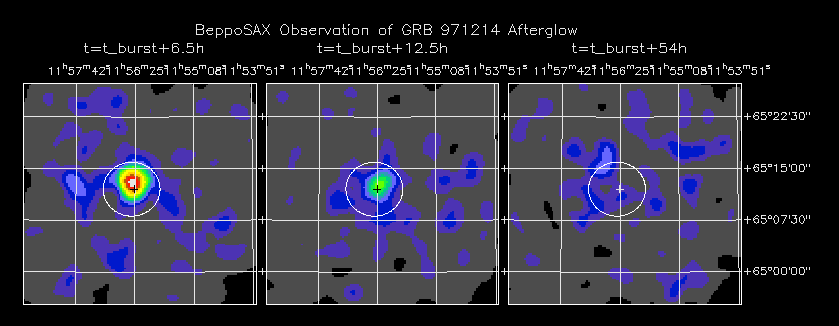
This sequence of three false color X-ray pictures from the Italian/Dutch BeppoSAX satellite follows the fading glow from a gamma-ray burster . This burster triggered orbiting gamma-ray observatories on December 14, 1997 and within 6.5 hours the sensitive X-ray cameras onboard BeppoSAX had been turned to record the first image (left) of the afterglow. Each image covers a field about the size of the full moon with the position of the afterglow indicated by the white circle. The first two pictures were taken 6 hours apart, while the final picture was made 2 days after the gamma-ray burst. Initiated by an unknown but immensely powerful explosive event, gamma-ray bursts are thought to be caused by blast waves of particles moving at nearly the speed of light. The expanding cosmic fireball produces seconds-long bursts of gamma-rays and then as it slows and sweeps up surrounding material, generates an afterglow visible for many days at X-ray, optical, and radio energies . Evidence indicates that this burst originated at a distance of 12 billion light-years requiring a fantastic and extreme energy source. What could power a gamma-ray burst ?