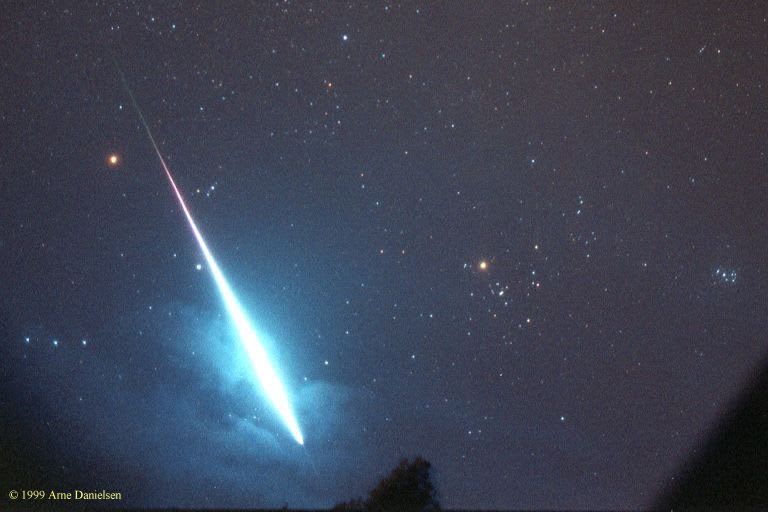
1999 Leonid Fireball
Most Leonid meteoroids, the bits of comet debris which produce the annual Leonid meteor shower , range from a mere millimeter to a centimeter in diameter. Yet these cosmic grains of sand and gravel can put on quite a spectacular show . How can something so small generate so much light? The answer is their astronomical speed, as these particles enter Earth's atmosphere at around 71 kilometers per second . In the high-speed collisions with air molecules , electrons are stripped from atoms as meteroid material is blasted away. When the electrons recombine with the atoms, light is emitted. This dramatic example of a brilliant 1999 Leonid meteor was photographed while tracking the stars in partly foggy skies on November 18, from a location near Dagali, Norway. The two bright reddish-orange stars visible are the familiar giant stars Betelgeuse (left) and Aldebaran .