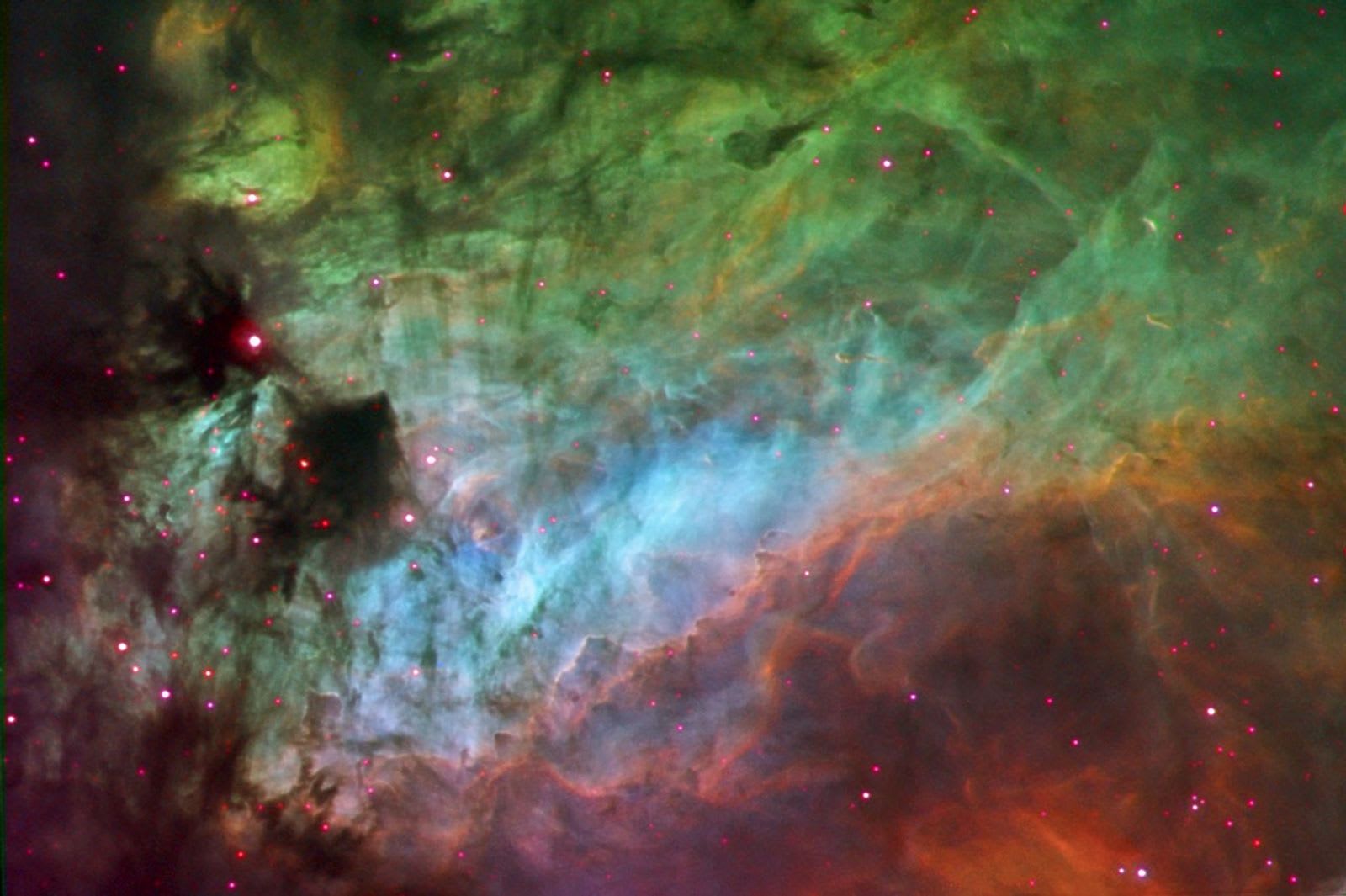
Elements of the Swan Nebula
In the depths of the dark clouds of dust and molecular gas known as M17 , stars continue to form. Also known as the Omega Nebula and Horseshoe Nebula, the darkness of M17's molecular clouds results from background starlight being absorbed by thick filaments of carbon-based smoke-sized dust . As bright massive stars form, they produce intense and energetic light that slowly boils away the dark shroud. Colors in the above image were picked to highlight specific element s that emit nebular light: red indicates emission from sulfur , green from hydrogen , and blue from oxygen . The Swan Nebula is visible with binoculars towards the constellation of Sagittarius , lies 5000 light-years away, and spans 20 light-years across.