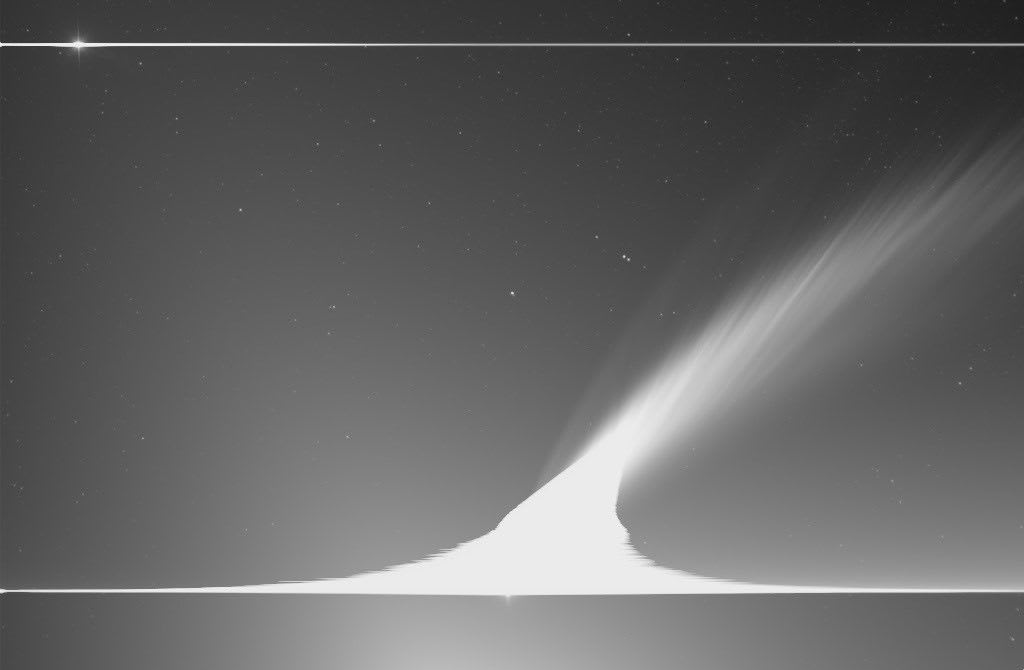
The Iron Tail of Comet McNaught
Outstanding in planet Earth's sky early this year, Comet McNaught is captured in this view from the STEREO A spacecraft. McNaught's coma is so bright, it blooms into the long horizontal stripe at the bottom of the field. Brilliant Venus, near the top left corner, also produces a severe horizontal blemish in the digital image. But the sensitive camera does accurately record the striations in McNaught's famous dust tail along a region stretching over 30 million kilometers toward the top right of the field of view. A separate, fainter, arching tail just to the left of the dust tail was initially thought to be an example of a common ion tail , formed by electrically charged atoms carried away from the comet by the solar wind . However, detailed modeling indicates that tail is actually due to neutral iron atoms pushed out by the pressure of sunlight -- the first ever detected neutral iron tail from a comet. The iron atoms are thought to originate in dust grains from the comet nucleus that contain the iron-sulfur mineral troilite (FeS).