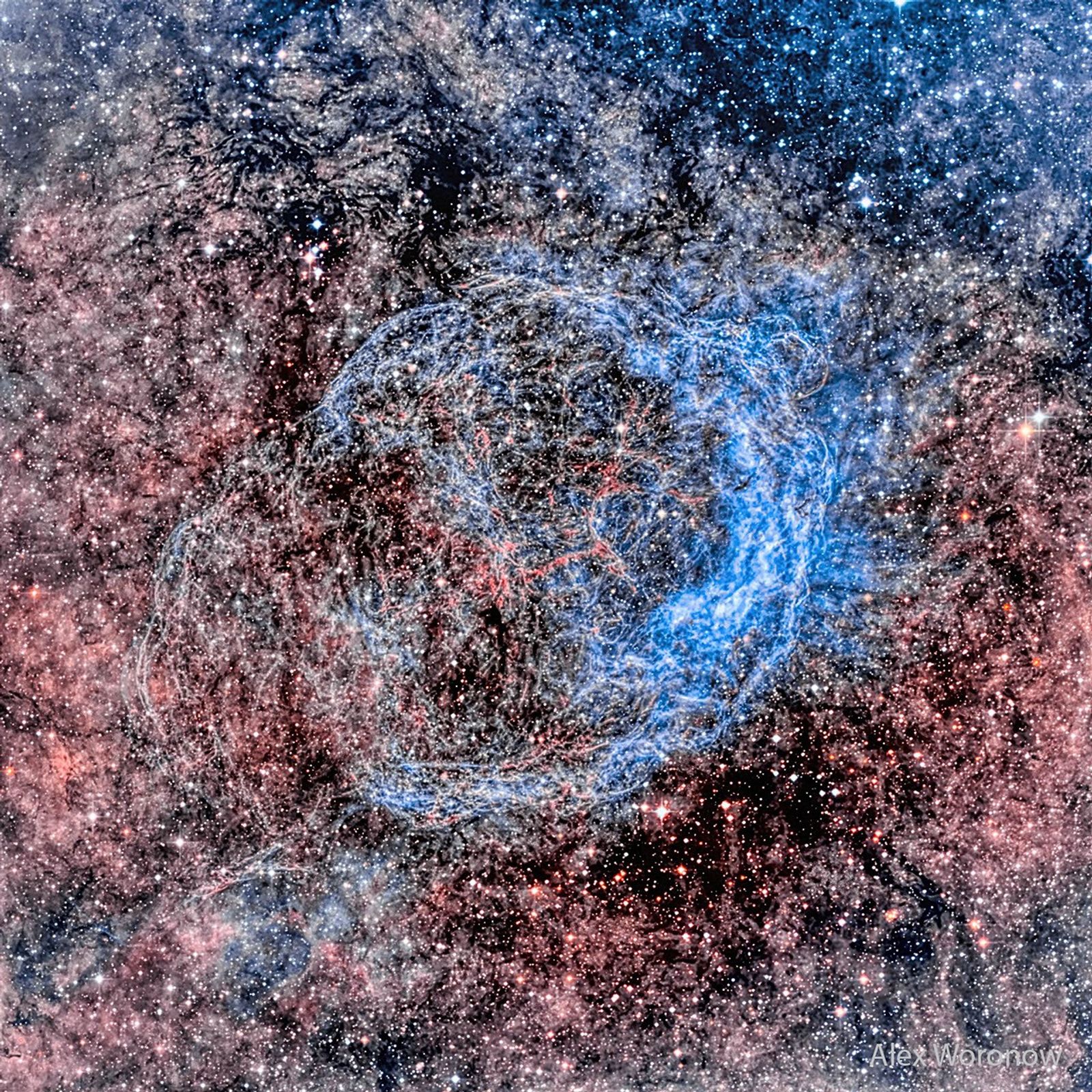
The Asymmetric Nebula Surrounding Wolf-Rayet Star 18
Credit: Alex Woronow
Why does the nebula around the star WR-18 shine brighter on one side? Also known as NGC 3199, this active star and its surrounding nebula lie about 12,000 light-years away toward the nautical southern constellation of Carina. The featured deep image has been highly processed to bring out filamentary details of the glowing gas in the bubble-shaped nebula. The nebula is about 75 light-years across. Near the nebula's center is a Wolf-Rayet star, WR-18, which is a massive, hot, short-lived star that generates an intense and complex stellar wind. In fact, Wolf-Rayet star s are known to create nebulas with interesting shapes as their powerful winds sweep up surrounding interstellar material. In this case, the bright right edge was initially thought to indicate that a bow shock was being produced as the star plowed through a uniform medium, like a boat through water. Recent measurements and analyses, however, have shown the star is not moving quickly toward the bright edge. A more likely explanation has emerged that the material surrounding the star is not uniform, but clumped and denser near the bright edge.