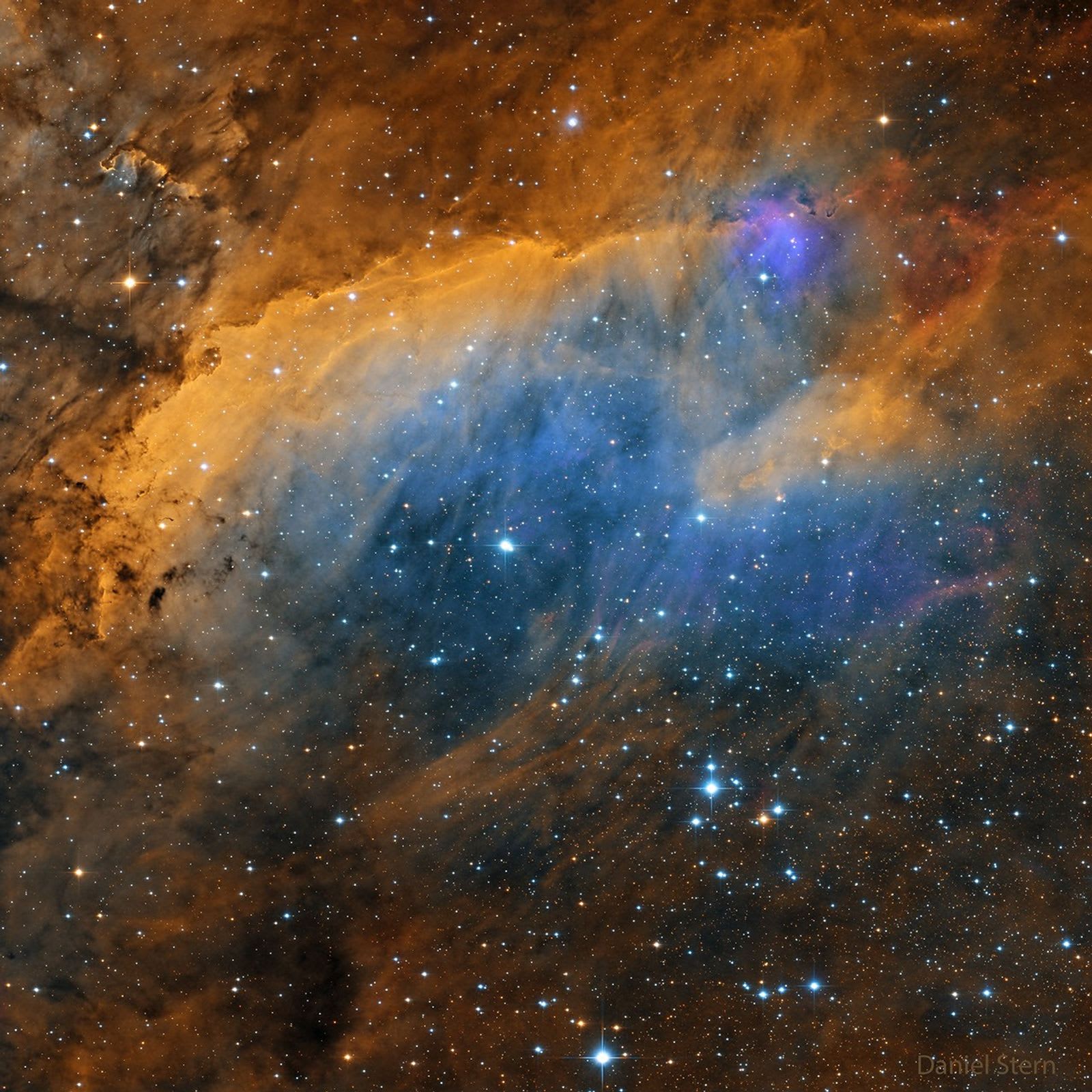
IC 4628: The Prawn Nebula
Credit: Daniel Stern
South of Antares, in the tail of the nebula-rich constellation Scorpius, lies emission nebula IC 4628. Nearby hot, massive stars, millions of years young, irradiate the nebula with invisible ultraviolet light, stripping electrons from atoms. The electrons eventually recombine with the atoms to produce the visible nebular glow, dominated by the red emission of hydrogen. At an estimated distance of 6,000 light-years, the <a region shown is about 250 light-year s across, spanning over three full moons on the sky. The nebula is also cataloged as Gum 56 for Australian astronomer Colin Stanley Gum, but seafood-loving deep sky-enthusiasts might know this cosmic cloud as the Prawn Nebula. The graceful color image is a new astronomical composition taken over several nights in April from Rio Hurtado, Chile.