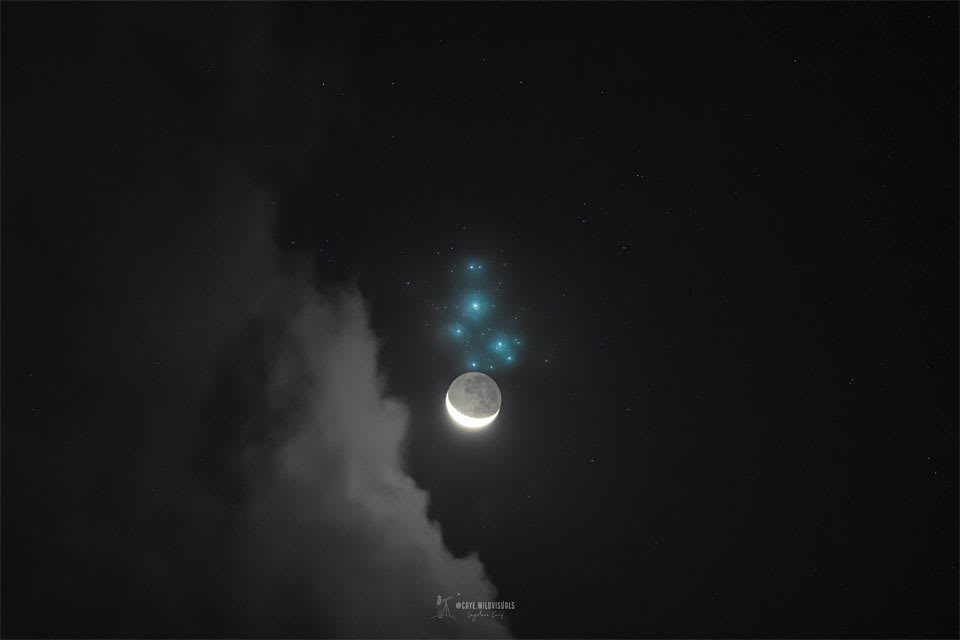
Moon Visits Sister Stars
Credit: Cayetana Saiz
Sometimes, the Moon visits the Pleiades. Technically, this means that the orbit of our Moon takes it directly in front of the famous Pleiades star cluster, which is far in the distance. The technical term for the event is an occultation, and the Moon is famous for its rare occultations of all planets and several well-known bright star s. The Moon's tilted and precessing orbit makes its occultations of the Seven Sisters star cluster bunchy, with the current epoch starting in 2023 continuing monthly until 2029. After that, though, the next occultation won't occur until 2042. Taken from Cantabria, Spain on April 1, the featured image is a composite where previous exposures of the Pleiades from the same camera and location were digitally added to the last image to bring up the star cluster's iconic blue glow.
Jigsaw Challenge: Astronomy Puzzle of the Day