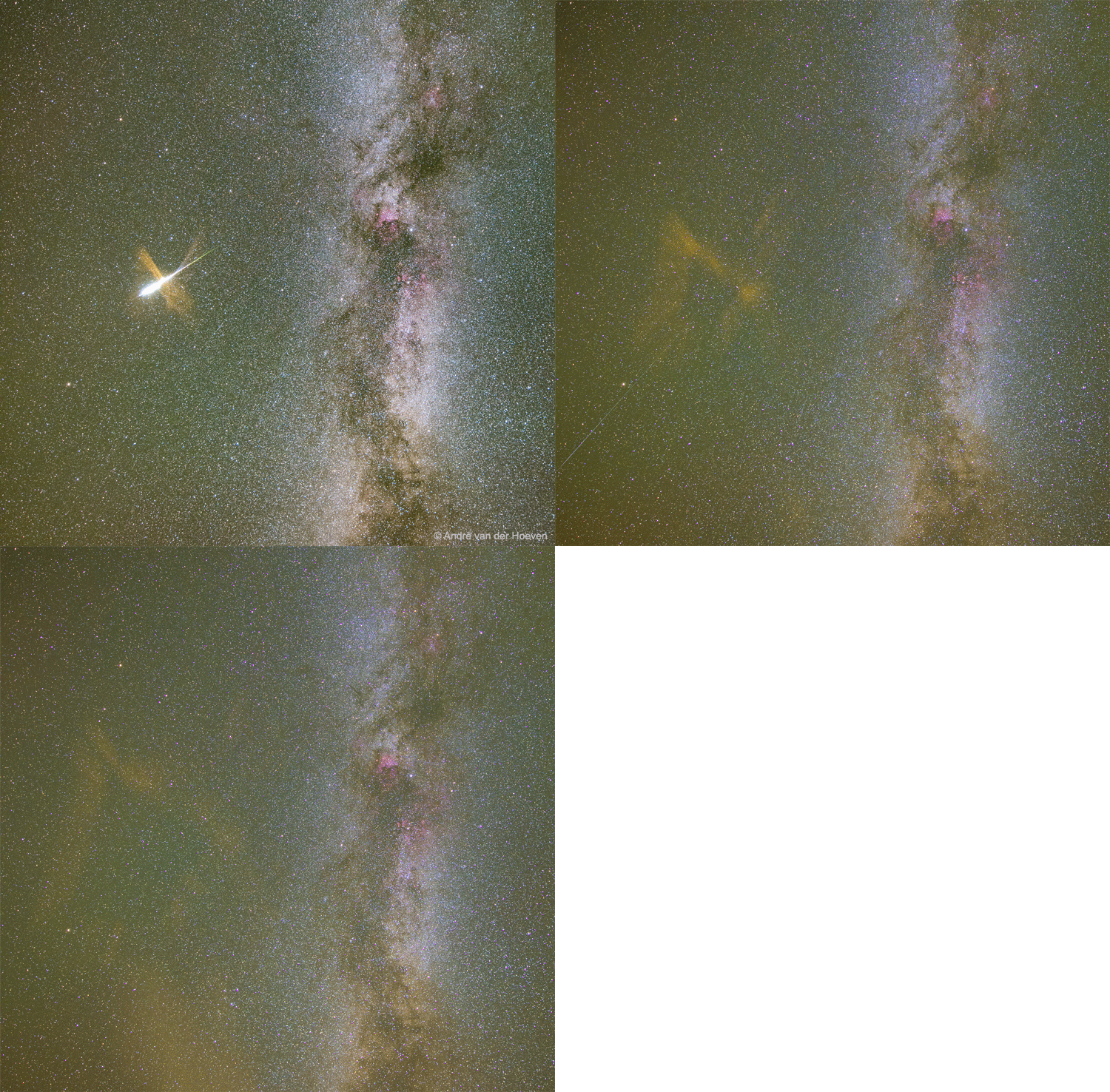
Milky Way and Exploding Meteor
In about a week the Perseid Meteor Shower will reach its maximum. Grains of icy rock will streak across the sky as they evaporate during entry into Earth's atmosphere . These grains were shed from Comet Swift-Tuttle . The Perseids result from the annual crossing of the Earth through Comet Swift-Tuttle 's orbit, and are typically the most active meteor shower of the year. Although it is hard to predict the level of activity in any meteor shower , in a clear dark sky an observer might see a meteor a minute. This year's Perseids peak just a few days after full moon , and so some faint meteors will be lost to the lunar skyglow . Meteor showers in general are best seen from a relaxing position , away from lights. Featured here is a meteor caught exploding during the 2015 Perseids above Austria next to the central band of our Milky Way Galaxy .