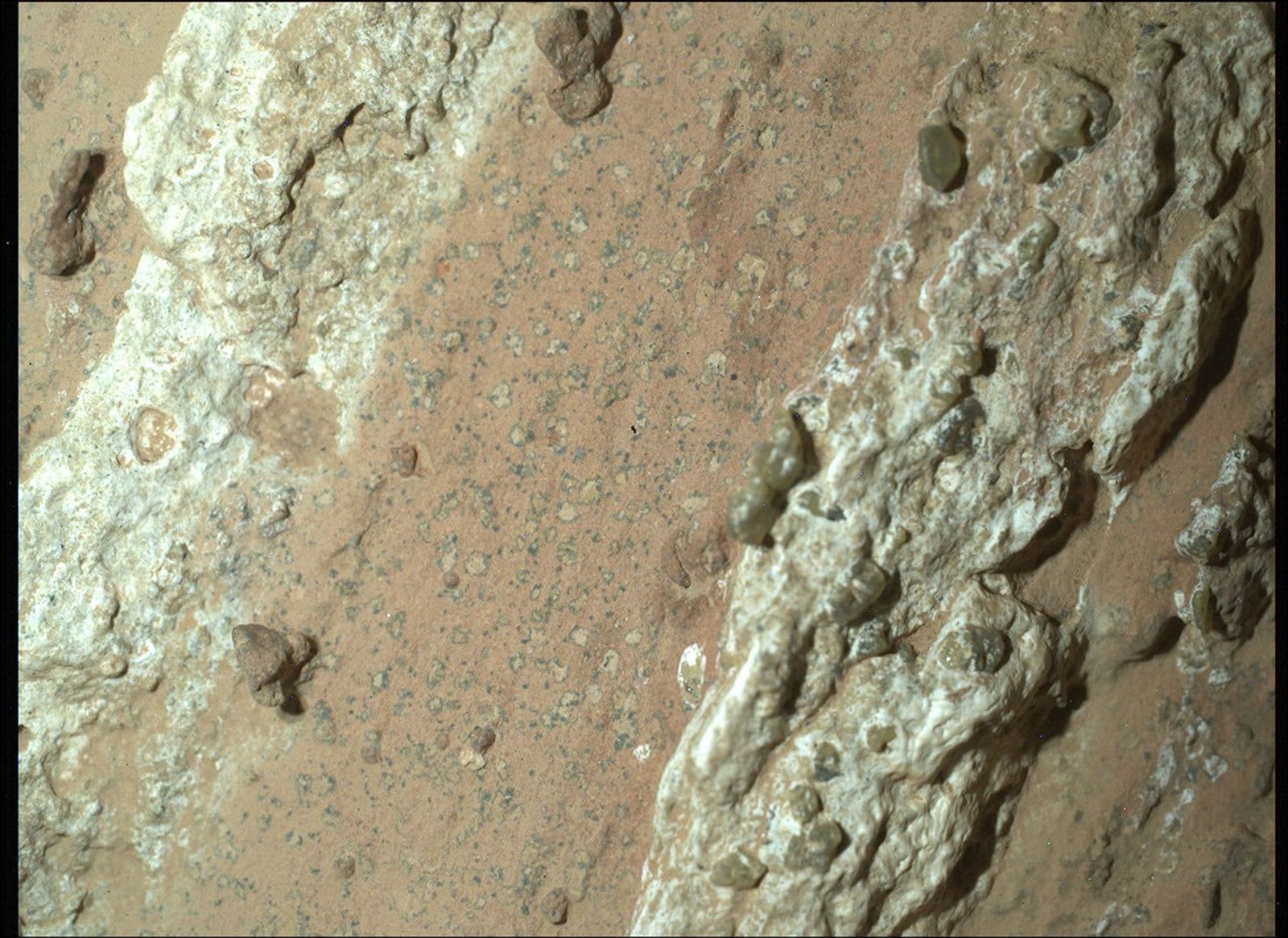
Leopard Spots on Martian Rocks
Credit: NASA, JPL-Caltech, MSSS, Perseverance Rover
What is creating these unusual spots? Light-colored spots on Martian rocks, each surrounded by a dark border, were discovered last year by NASA 's Perseverance Rover currently exploring Mars. Dubbed leopard spots because of their seemingly similarity to markings on famous Earth-bound predators, these curious patterns are being studied with the possibility they were created by ancient Martian life. The pictured spots measure only millimeter s across and were discovered on a larger rock named Cheyava Falls. The exciting but unproven speculation is that long ago, microbe s generated energy with chemical reactions that turned rock from red to white while leaving a dark biosignature ring, like some similarly appearing spots on Earth rocks. Although other non-biological explanations have not been ruled out, speculation focusing on this potential biological origin is causing much intrigue.